


Most workplace transformation projects begin with the right intention.
Leadership invests time, appoints good people and sets clear objectives. In the early stages, the vision is strong and the standards are high.
But as complexity grows and pressure increases, coordination becomes harder to maintain. The original drivers and aspirations gradually give way to compromise, often unintentionally.
It’s easy for cultural bad habits to form and become the norm. Part of the office gets neglected, or the untidy corner just gets accepted and eventually goes unseen by everyday eyes. But fresh eyes see it: clients, customers, new staff.
Somewhere between that first vision and the reality years later, the work gets lost. Recovering it has a name.
What is workplace transformation?
Workplace transformation is the strategic redesign of the workplace, focusing on better ways of working, improving culture, streamlining technology and supporting ongoing business needs.
Put more simply, it assesses where you work, how you work, and with which tools.
Each stage should be designed to maintain clarity, alignment and quality from the first conversation to the day your people walk in. That way, the workplace that gets delivered is the one that was always envisioned.
Workplace transformation supports better ways of working because it forces people to look at what they no longer see, and assess what no longer serves them. More importantly, it helps people get excited about how good work can be again.
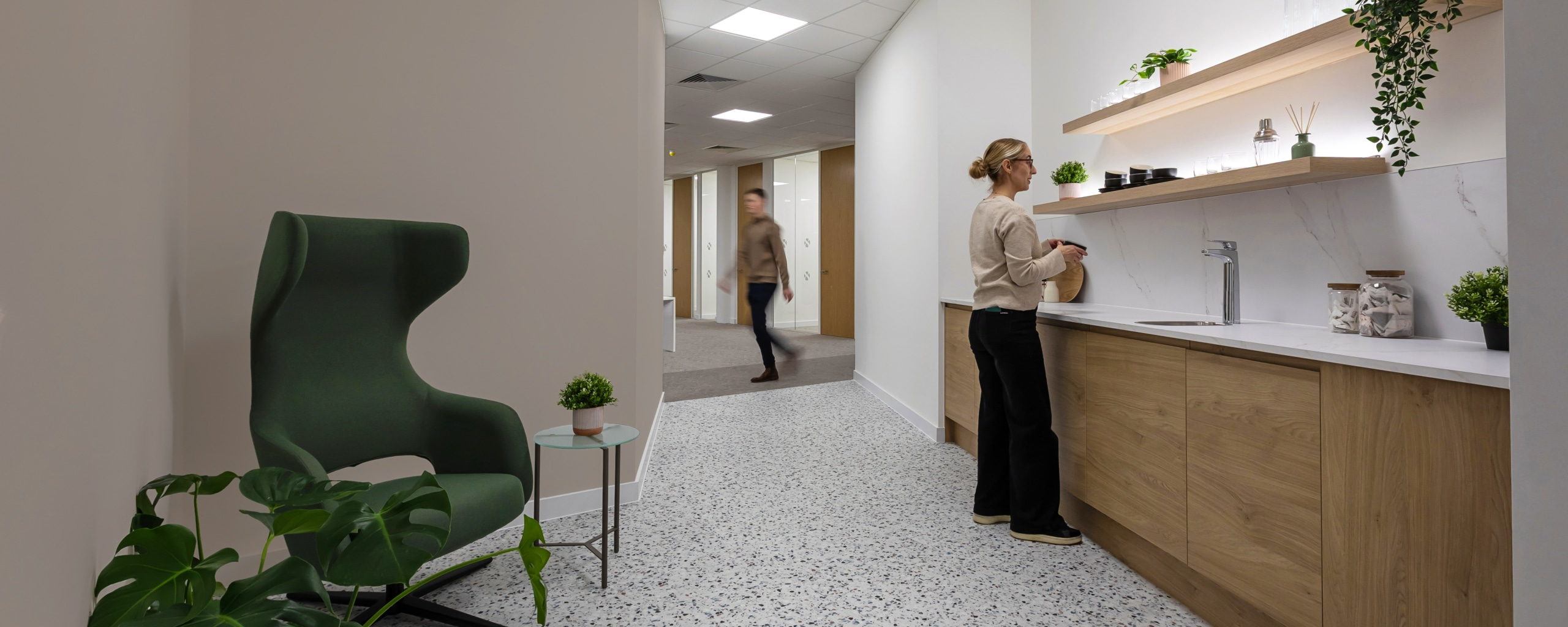
The challenge with workplace transformation
Most workplace challenges begin with an unclear or misaligned brief. Not a design failure, a process one, and it starts long before anyone picks a material or draws a layout.
There’s a useful, if slightly uncomfortable, comparison here. The Broken Windows Theory (James Q. Wilson and George Kelling, 1982) argued that visible signs of neglect in a shared environment invite further neglect. One unrepaired window signals that nobody’s watching, and more windows get broken.
Offices work on a similar logic, minus the criminality. A neglected corner, an unclear process, a decision nobody owns; left alone, these things don’t stay small. They become the accepted texture of a workplace, invisible to the people who work there every day and glaringly obvious to the client, candidate or new hire walking in for the first time.
That’s why the design is not the most important part of a workplace transformation. The most important work happens before design starts, in getting honest about what’s actually misaligned and why. Behind every workplace that still works years later is an infrastructure and a process that simply works too.
Workplace transformation = happier teams
A well-designed space tells employees that leadership cares about the environment they spend their working lives in.
Research backs this up directly. Workplace happiness is boosted by 33% when workers feel comfortable with the design of their office (Personal Group). That’s not a soft, hard-to-measure benefit. It’s a substantial jump, from a fairly simple lever.
It also tracks with how people treat a space they’re proud of. An office people feel good in tends to be an office people look after, which reinforces the very sense of pride that made them look after it in the first place. Design and culture end up feeding each other, for better or worse.
That pride has a retention dimension too. People are more likely to stay somewhere they feel good walking into, and harder to replace them once they don’t.
Workplace transformation = better productivity
Interestingly, even the expectation of workplace transformation supports better ways of working. 65% of workers believe an ideal layout would boost their productivity (Savills). That means most people already assume their environment is a significant factor in how well they work, before any change has even happened.
There’s evidence to back the instinct up. Offices with plants and artwork saw workers being 17% more productive than those in spaces that were functional but bare (University of Exeter).
Biophilic design’s link to productivity is now widely accepted, which is part of why more organisations are choosing to formalise their commitment to it through frameworks like the IWBI’s WELL certification. WELL assesses ten core areas, including air, water, light, movement, thermal comfort and community, and it’s clearly worth it: employees working in WELL Certified buildings see a 10-point increase in productivity scores.
Workplace transformation = lower business costs
Gensler’s 2005 survey found that poorly designed offices could cost UK businesses up to £135 billion a year, a figure that’s unlikely to have shrunk in the decades since.
Much of that cost sits in space nobody’s using. Many offices, even several years on from the pandemic, still haven’t optimised their real estate footprint. With each empty desk costing more than £8,000 annually (Hybrid Hero), leaving that space unaddressed isn’t a neutral decision, it’s an ongoing one.
A workplace transformation tightens the ship. It strategically allocates every space to a purpose, whether that’s focus zones, collaboration areas, wellness spaces or the connective areas people move through between them, so square footage is working for the business rather than sitting empty on the balance sheet.
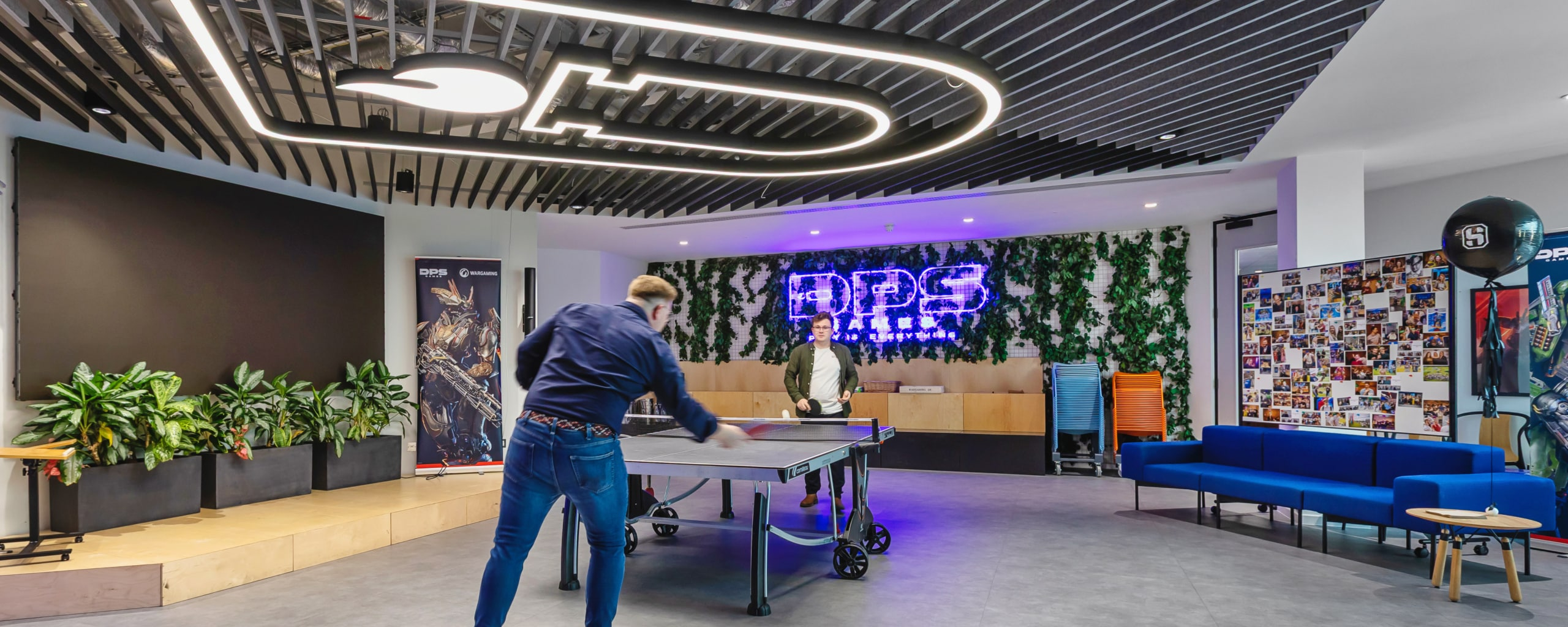
Guiding people-driven organisations through complex projects
Every project we deliver starts the same way: understanding your organisation, your culture, your people, before a single line gets drawn.
Some of what that work protects is harder to put a number on. When pathways are more fluid and teams are better connected, communication improves, and the everyday friction of department blaming and inter-team hold-ups tends to ease. Smarter real estate decisions build in agility too, a workspace that can flex as headcount grows or shrinks, supports better budgeting and reduces financial risk down the line.
That’s the work before the design. Get it right, and what gets delivered is an office that’s well-designed, well-used and still working well years after handover. If that’s the kind of project you’re planning, get in touch with us today.
Frequently Asked Questions
What is workplace transformation?
Workplace transformation looks at how your space, people and processes work together. Our workplace strategy service helps define the brief before design begins.
How can workplace transformation improve productivity?
A better planned workplace gives people the right settings for focus, collaboration and movement. Thoughtful office design helps remove friction from the working day.
Can workplace transformation support hybrid working?
Yes, workplace transformation can help offices support changing occupancy, shared desks and different work styles. Our hybrid working service focuses on making space work harder.
Which workplace transformation projects has Spectrum supported?
We have supported workplace transformation projects for Southern Co-op, Aerial Direct and Lead Forensics, each shaped around people, culture and performance.
When should we start planning a workplace transformation?
The best time is before design decisions are made, when your brief, budget and business goals can still be shaped properly. To start that conversation, contact us.


